Cranberry Turkey Meatballs

Let me be the first to say that I am not a great cook. I have a really bad habit of over cooking food, I don’t usually know what spices go well in what recipes, and I tend to ‘eyeball’ measurements incorrectly. With this said, my turkey meatball recipe is really easy and it makes a pretty tasty and healthy meal. This recipe makes 12-15 meatballs.

Cranberry Turkey Meatballs 1

Cranberry Turkey Meatballs 2

Cranberry Meatballs:
Prep: 10 minutes
Cooking Time: 20 minutes

Ingredients:
1 lb of extra lean ground turkey
1/2 cup of rolled oats
1 egg
1 egg white
1/3 cup Dried Cranberries
Pinch of Salt

(Optional Ingredients)
4 TBSP of Parmesan Cheese
Shaved Carrots
Dash of Rosemary

Directions:
1.Preheat the oven to 350 degrees F (175 degrees C). Grease a large pan with olive oil or cooking spray, and place it in the oven while preheating.
2. Quickly dice the dried cranberries on a cutting board.
3. In a large bowl, mix together the ground turkey, oats, egg, egg white, cranberries, and any other optional ingredients.
4. Using your hands, or an ice cream scoop if possible, form the meat into golf ball sized meatballs (about 1-1.5 inches in diameter). Place the meatballs about 1 inch apart on the pan.
5. Bake for 12-15 minutes in the preheated oven, then turn them over, and continue baking for 5-8 more minutes. The meatballs should look light brown on the outside. Cut into one meatball to make sure they have been cooked entirely through.
6. Let the meatballs cool and serve with vegetables, pasta, or any way you would like it.

Tip:
– I like to double the batch and save the meatballs for my meals for the week. The cranberries make the meatballs a little sweet, so when I reheat them, I like to rub a tiny bit of coconut oil on the outsides of the meatballs and heat them up in the microwave or oven. I usually have about 5-6 meatballs with a side of vegetables (asparagus or green beans with a little coconut oil are my favorites to have with these meatballs).

Let me know if you like this recipe. Do you have any healthy recipes you would like to share? Contact me at corestrengthalec@gmail.com with questions, comments, and ideas for future topics.

How to do a Burpee!

BURPEES! You love them and you hate them.
Burpees are an amazing cardio workout and work many of your major muscle groups. Burpees are one of the best full body workouts you can do in your exercise routine, however it is also easy to do a burpee incorrectly, making the exercise not as effective.

To do a Basic Burpee:
1. Start in a standing position
2. Squat down and place your hands on the ground.
3. Jump your feet back to put yourself in a plank position.
4. Jump your feet forward to return to the squat position.
5. Jump up straight off the floor from the squat position.
6. Repeat from Step #1

There are many variations of Burpees. The most common variation is the Burpee Pushup where one pushup is done while in the plank position. (Between steps #3 and #4 of the Basic Burpee instructions, do a pushup).

Tips:
1. When squatting down, try and get your glutes low to the floor. This will make the exercise seem harder, but that is because you are activating most of the muscles in your legs from your quads, to your glutes and hamstrings. This muscle activation will help tone your legs more effectively.
2. While in the plank position, make sure to keep your body completely flat and activate your core. It is very easy to raise you hips and glutes up toward the ceiling.
3. When jumping during this exercise, and in any other exercise, land with bent knees. If you jump and land with your legs completely straight, you will put too much pressure on your knees and lead to injuries in the future.
4. Burpees can be done as a FT workout (For Time) or AMRAP workout (As Many Reps As Possible). If you do a FT workout, give yourself a certain number of burpees to do and see how much time it takes you to complete the workout. If you choose to do an AMRAP workout, give yourself an amount of time, usually a minute or two, and see how many burpees you can do in the time allotted.

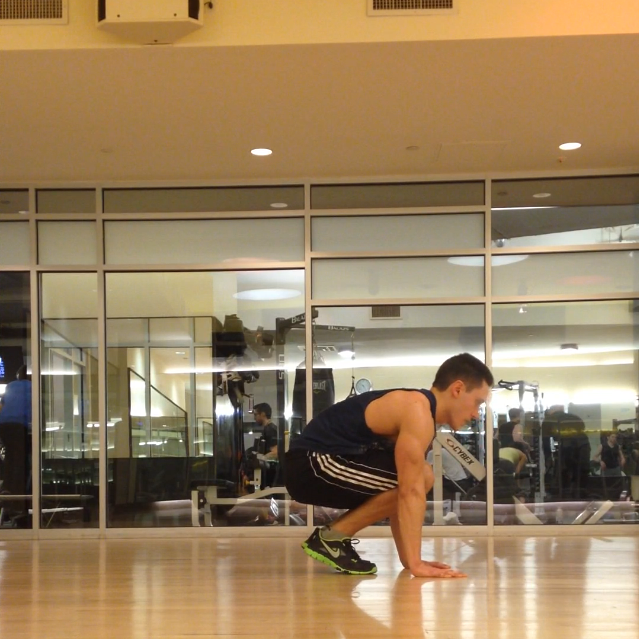
Burpee: Step 3

Burpee: Step 3

Burpee: Step 2

Burpee: Step 2

Burpee: Step 1

Burpee: Step 1

Burpee: Step 5

Burpee: Step 5

Burpee: Step 4

Burpee: Step 4

Burpee: Step 3a (optional pushup)

Burpee: Step 3a (optional pushup)

Burpee: Step 6

Burpee: Step 6

Do you include Burpees into your workout? Do you have any variations that you would like to share? Contact me at corestrengthalec@gmail.com for any questions, comments, or ideas for new topics.

Good Carbs vs Bad Carbs

goodandbadcarbs
I think most of us have heard the terms ‘good carbs’ and ‘bad carbs’ before, but do we actually know what they mean. To make it as simple as possible, ‘Good Carbs’ come from foods that also have a good source of fiber. For example, fruit, vegetables, whole grains, beans, etc. ‘Bad Carbs’ come from foods with little to no fiber content, such as white bread, white rice, etc. Fiber allows the body to slowly digest the carbs that we consume which leads to more stable blood sugar. If we eat food high in carbs and low in fiber, we quickly digest the carbs which then causes spikes in our blood pressure.
One other major thing to understand about good carbs and bad carbs is the composition of the carbs themselves. When carbs are digested, they are broken down into glucose (sugar) which the body needs for energy. During digestion, the body will break down any carb it is given into glucose; however, because of the fiber and other nutritional value with good carbs, the body is taking in more than just glucose. With bad carbs, the body is only quickly converting the carbs to glucose with no other vitamins or minerals to digest; therefore the calories being consumed can be considered ’empty’ calories and not beneficial.

The moral of the story is:
1. Stay away from foods high in carbs, but low in fiber.
2. It is healthy to eat ‘good carbs’ (aka. foods with vitamins, minerals, and fiber)

I hope this article helped. If you have any comments, questions, concerns, or ideas for other blog post, email me at corestrengthalec@gmail.com .

Do You Hate Running? Try Running In Reverse!

Ever since I was a kid, I never liked running. I didn’t mind playing a game of tag or running to a base during a kickball game, but when it came to long distance running, I never excelled… I flat out stunk at it. Friends of mine today keep telling me how they are preparing for different races, and all I can think about is how I can’t even stay on a treadmill for 10 minutes without wanting to pass out. I have tried entering races, running with friends, and even running with my dog, but I still can’t keep up. I have always wanted to reach that ‘runners high’ people talk about when they can just run for hours and just enjoy it, but no matter what I do, I have not been able to find a method that works for me… Until now!

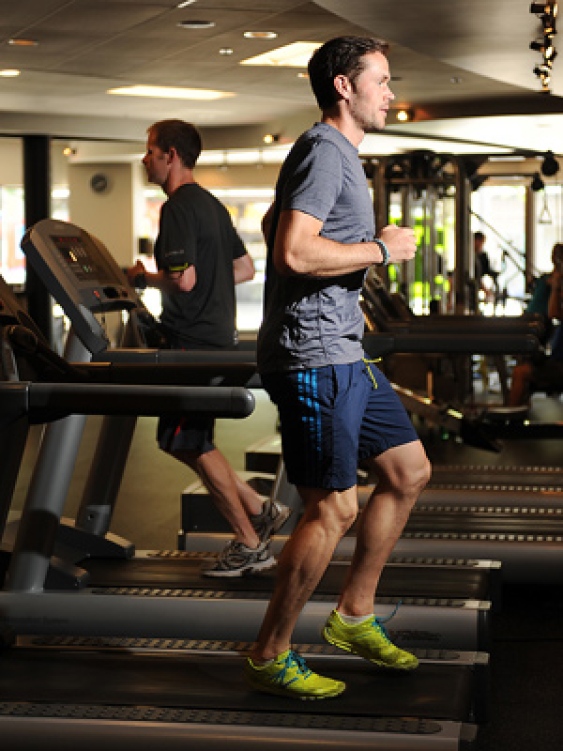
Backward running
It may sound crazy, but one day at the gym, I decided to put the treadmill on a low speed and turn around. I started jogging backward, and eventually after a few mintues I was able to bump up the speed and pretty much run in reverse. I will admit it felt weird at first, but then I really started enjoying it. None of my joints were hurting, I wasnt running out of breath too quickly, and I was finally able to run for over 30 minutes without having any issues.

Now what are the benefits to running in reverse?
According to the New york Times Well blog and studies done by the University of Milan, running backwards can be easier on your joints, can help with muscle therapy, burn more calories, and increase balance. When running forward, a person puts a lot of tension and hard pounding on the knee joint. When running backward, however, there is much less hard pounding since our muscles and tendons act differently and instead of landing on our heels and taking off our toes like most people do when running forward, when running backward we land through our toes. Running backward also burns more calories because of the muscle and tendon activity. When running foward, we rely a lot of the motion and effort on the elastic energy in our muscles and tendons. When in reverse, this energy is not present, so we exert almost 30% more energy in order to run backward at the same speed. Our muscles are activated in order to stabalize our bodies in the backward motion which also helps improve our balance when moving both foward and backward and helps burns more calories.

When first implementing backward running, make sure to start off slow. It is a new motion for your body, and will take a little time to get used to. I currently only run backward at 4.5 mph on the treadmill to ensure safety, but also feel the benefits of the exercise. Trust me, after running backward for a few minutes, your calves and quads will be burning!

Try this exercise out and let me know what you think. Email me at corestrengthalec@gmail.com for any questions, comments, feedback, or ideas for future topics to discuss.

To view the New York Times Well blog article on reverse running, Click Here.

Bruschetta Spinach Omelette

Bruchetta Spinach Omelette

This omelette is not only a delicious breakfast, but it also is a great meal for any time of day. For anybody out there on a low carb diet, you need to try omelette recipes like this! The entire omelette has less than 5g of carbs, about 20g of protein, and a good amount of healthy fats (which you need on any diet!). Another reason I love this meal is because it takes only a few minutes to make. All you need to make this is 1 egg mixed with 2 egg whites, 1 cup of spinach, 2 tbsp of Parmesan Cheese, and a half cup of Bruschetta (plum tomatoes, garlic, basil, extra virgin olive oil, and other spices depending on what recipe you may try). Mix the egg and egg whites in a bowl and cook in a pan. Once most of the egg is cooked, flip the omelette over and add the spinach and cheese on top. Fold the omelette over and finish cooking until the omelette in golden. Place on a plate and add the bruschetta on top. Thats it! Try it out and let me know what you think!

Like this recipe? Have any you would like to share? Email me at corestrengthalec@gmail.com

Feature Friday: Eric Turner

Eric 1
First name: Eric
Last name: Turner
City: Houston
State: Texas (Originally from Herriman, UT)
Age: 32
Height: 6’1″
Weight: 208
Profession: Personal Trainer

Follow Him:
Twitter: @erictastic
Instagram: erictastic

When did you start working out?:
When I was 21.

Eric 2

How many days a week do you work out?:
I do weights 5 days a week and I do cardio 6 days a week.

How long is your average workout?:
Usually 90 min

Favorite muscles to exercise:
Legs

Least favorite muscles to exercise:
Legs. lol

Eric 3

Do you have any fitness goals? If so, what are they?:
I’m constantly trying to better myself and my symmetry, and I’m currently competing for my IFBB Pro Card.

Do you have any fitness inspirations? If so, who are they?:
Jaco De Bruyn

What supplements do you take or recommend?:
I think people misunderstand what supplements are for. They are intended to supplement any areas that your diet is lacking. I tend to only take supplements when I’m dieting down so that I still get the nutients that I’m lacking.

Eric 4

Can you give a brief overview of your diet?:
It’s constantly changing, so that I won’t plateau. It generally consists of around 45-50% of kilocalories from carbs, 30-35% of kcal from proteins, and 15-20% of kcal from fats.

Do you have any workouts that you specifically like, that you believe are very affective?:
You can’t have a good physique if you focus too much on one thing. Variety is the spice of life when it comes to me working out. I have lately been obsessed with lateral raise drop sets though.

Do you have any tips for people who are trying to reach their fitness goals?:
Keep with it. Consistency is the magic ingredient!

Do you have any other things you would like to say?(Comments, suggestions, etc)?:
I get a lot of questions from people who have all sorts of strange ideas of things they’ve heard… I think the biggest misnomer that people have is that low carb is always the way to go. If you’re looking to build muscle, you can’t pack on muscle without eating carbs, and cutting them out actually makes gaining muscle pretty difficult.

A Better Way To Eat Almonds

Did you Know…

You can get more out of your almonds by soaking them in water.

Almonds are one of my go to foods to snack on because they are high in protein, fatty acids, omega-3 and fiber. Almonds are also considered a Superfood because of the high levels of Vitamin E, Antioxidants, and they help curve your hunger. After doing some research I found out that soaking almonds actually helps you absorb more of the nutrients the almonds have to offer, but how?

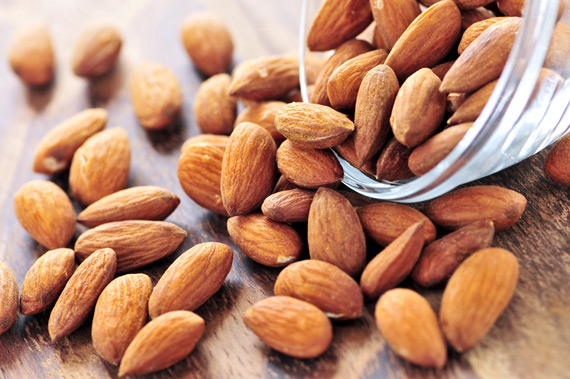
Almonds2

The brown skin on an almond protects it until the correct levels of sunlight and moisture allow it to germinate. Because of this, eating an almond without allowing it to get proper moisture makes it harder to digest. When the almond is soaked; however, the outer brown skin is penetrated and the almond releases enzymes. When eating an almond that has been allowed to take in such moisture, you are able to digest the almond more efficiently and absorb the healthy nutrients the almond has to offer.

How to soak an Almond:
This is very easy. It is recommended to put the almonds in a bowl of purified water. Cover the almonds with 2 cups of water per 1/2 cup of almonds. Soak the almonds in the bowl overnight (10-12 hours). After the 10-12 hours, drain the almonds and eat or store them. You can store the almonds in the refrigerator for about one week. The almonds are soft, sweet, and they taste great!

Apparently, if you would like to sprout your almonds, simply soak you almonds overnight and place them in a glass jar with a lid in the refrigerator. After a few days, the almonds should begin to sprout (about 1/8-inch sprout should show). A sprouted almond can be more beneficial than a soaked almond because they are easier to digest and they also release lipase (an enzyme that helps digest fat). I have not tried this, but would like to very soon. If you have, please let me know what you think!

Do you like this post? Do you have any other ideas for posts? If you have any questions or comments please email me at corestrengthalec@gmail.com!

Men Need Zinc!

fit man

I was confused at first as to why men needed higher amounts of zinc than women. I honestly didn’t even really know what Zinc did for your body. Here is what I found:

HOW MUCH DO WE NEED:
The recommended amount of Zinc for the average male is 11mg per day and the recommended amount of Zinc for the average non-pregnant or breast-feeding female is 8mg per day. Males need more Zinc than females not only because they generally have larger bodies, but a sexual active male also looses zinc through ejaculations.

WHY DO WE NEED IT:
Again, I knew that Zinc was important, but I had no idea why we needed it. After researching I realized that Zinc is actually quite crucial for your health and well-being! Zinc is found in almost every cell in your body. It helps activate the enzymes that improve your metabolism, fight off infection, improve the strength and complexion of your skin, and play an important part in reproduction. If you do not have enough Zinc in your diet, you may experience fatigue, hair loss, diarrhea, and many other unfortunate symptoms.

steak

WHERE CAN WE GET IT:
As I said in an earlier post, most nutritionists suggest getting your nutrients from food rather than supplements. Zinc can be found in many foods such as oysters, red meats, fortified cereals, peanuts, some seeds, dark chocolate, and many other foods. If you believe you are not getting enough Zinc in your diet, consider taking a zinc supplement to try and reach the 11mg per day.

HOW MUCH IS TOO MUCH:
Be careful!!! Zinc is one of those nutrients that you can overdose on! It is suggested to have no more than 40mg of Zinc a day. If you end up going over the 40mg recommendation, many side effects can occur. Some side effects include headache, dizziness, and loss of muscle coordination, nausea, loss of appetite. Too much Zinc also can lead to anemia because zinc interferes with the absorption of iron and copper.

Do you think you are getting enough Zinc in your diet? Do you take a Multivitamin or Zinc Supplement? Do you have any other questions for me? Contact me at Corestrengthalec@gmail.com!

Obesity in the USA

I was reading about nutrition tonight and came across a website that I thought was very interesting. It is obvious, based on the media we see and hear every day, that obesity is becoming a very big issue in the United States. There are countless reasons and theories as to why this is true, but did you ever wonder where the highest percent of obese people were in the USA? Do you want to know where your state racks up in the rankings? Check out http://healthyamericans.org/reports/obesity2011/ (Click Here) to see where your state ranks among the others. You may be very surprised!

Obesity Map from 2011

I was happy to see that my home state, Connecticut, was the third leanest state of the 50, but I was still surprised at how high some of the numbers were.

    – 15 years ago, Connecticut had a combined obesity and overweight rate of 45.2%. 10 years ago, it was 52.1%. Now, the combined rate is 59.8%.
    – The diabetes rate in Connecticut was determined to be 6.9 (up from 5.5 fifteen years ago).
    – 15 years ago, Connecticut had a hypertension rate of 21%. Now, the rate is 25.7%.

These are some scary numbers, and the sad part is that these are the numbers from the third leanest state! I can not imagine some of the numbers in the more obese states.

If you were wondering, the most obese state was determined to be Mississippi, and the leanest was determined to be Colorado. Where does your state rank?

Do you have any questions or concerns? Email me at corestrengthalec@gmail.com

Reverse Crunch (with Stability Ball)

A few days ago, I posted an exercise I frequently do called the Reverse Crunch. That exercise is great for core strength and toning, but when I am at a gym, and there is proper equipment around, I like to mix things up a bit. This following exercise is the same as a Reverse Crunch, but you use a stability ball to add some difficulty. The stability ball adds a small amount of resistance, and it also forces you to use better form. You must tightly squeeze your abdominals in order to lift the ball from the ground and it also does not allow your legs to sway too far from a proper position.

Reverse Crunch (w. ball) -  Position 1

Reverse Crunch (w. ball) – Position 1


Reverse Crunch (w. ball) -  Position 2

Reverse Crunch (w. ball) – Position 2

To perform a Reverse Crunch with a Stability Ball:

    1. Find a stability ball that allows you to rest your legs on top while creating a 90 degree angle at your hips and your knees (your calves and feet will be resting on the ball, parallel to the floor).
    2. Lie flat on your back with your hands at your sides.
    3. Place the Stability ball under your calves, resting against the back of your hamstrings. Your knees should only be a few inches apart.
    4. Squeeze your abs and legs in order to lift the stability ball slightly off the floor (You are now in Position 1 as shown in the first picture to the right).
    5. While squeezing the stability ball, raise your knees to your chest.
    6. While in motion of bringing your knees to your chest, roll your pelvis back and raise your hips up off the floor, creating a curve in your spine (You are now in Position 2 as shown in the second picture to the right).
    5. Hold Position 2 for a second and squeeze your abdominals.
    6. Slowly lower your legs and pelvis back down to Position 1.
    7. Repeat the exercise for the recommended amount of reps (I usually do 3-5 sets of 15 reps).

Tips:

    1. Just like any serious ab exercise, control is important! These motions do not depend on momentum, but rather slow controlled motions that engage your muscles.
    2. If this exercise is too difficult, I recommend starting with Reverse Crunches without the Stability Ball. I give step by step directions on how to perform this exercise here: Click Here
    3. Notice that when lowering my legs back down to Position 1, I try not to let the ball touch the floor; this will keep your core activated the entire exercise. If you need to take a break mid-exercise, lower the ball to the floor completely, and when ready, lift the ball off the floor again.
    4. Another possible variation of this exercise, that I find a bit easier to do, would be to have your knees further apart on the ball. The wider your knees are from each other, the easier this exercise appears to be.
    5. Make sure to exhale while bringing your legs up into your chest (from Position 1 to Position 2), and inhale when returning your legs back down to Position 1.
    6. Squeeze your abdominals when you hit the peak of Position 2. You should feel a burn in your entire core.
    7. If you are performing this exercise on a mat, DO NOT hold the edge of the mat. Leave your hands flat on the ground, and depend solely on your abdominals to perform this exercise.
    8. You will notice that it is common for the ball to slip from your legs during this exercise. Try your hardest to keep it in place. If it does move, simply use your hands to get it back into a proper position and continue the exercise.
    9. Stability balls come in all different sizes. Try to find one that allows you to make a 90 degree angle at your hips and knees, letting your calves and feet lie parallel to the ground while resting on top of the ball.

Let me know what you think of this new variation of the Reverse Crunch. I hope you like it! If you have any questions or concerns, email me at corestrengthalec@gmail.com